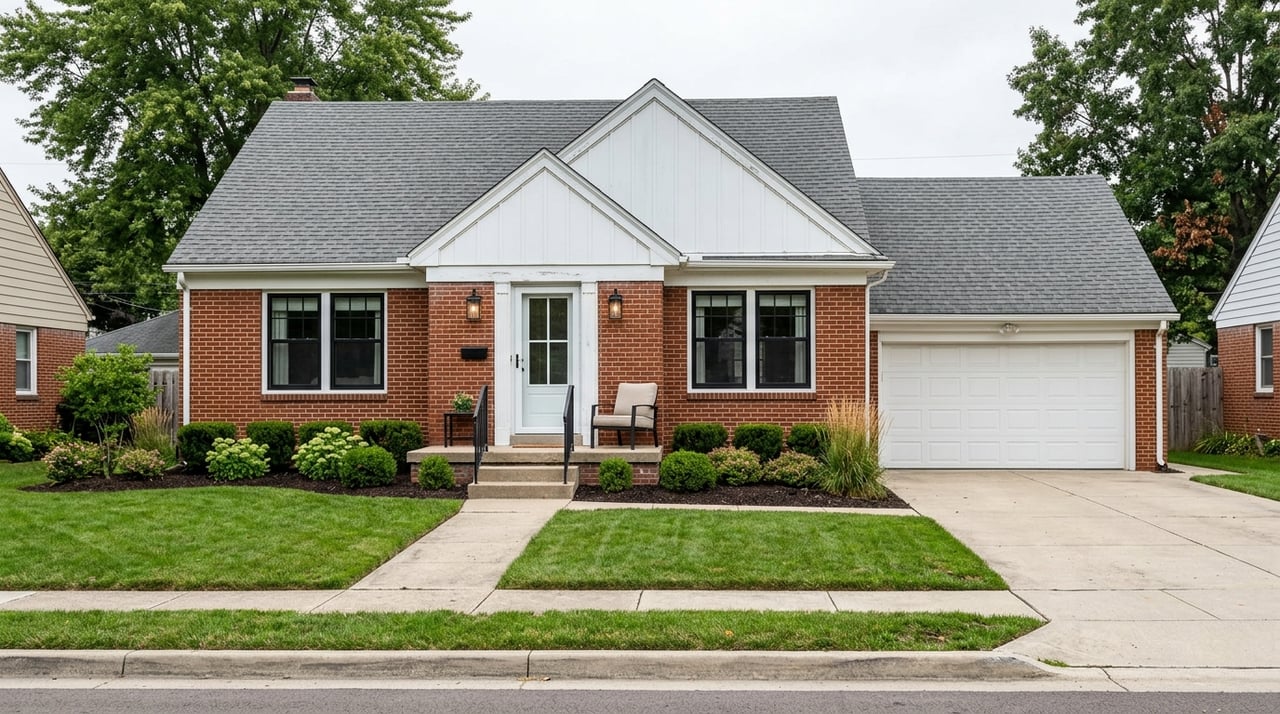
If you are getting ready to sell in Sun Prairie, it is tempting to ask one simple question: What is the highest price I can get? In today’s market, that is not quite the right question. A stronger question is how to price your home so it attracts the right buyers early, protects your negotiating position, and helps you keep more of your equity. Let’s dive in.
Why pricing matters now
Sun Prairie is still an active market, but it is not the kind of market where almost any price works. The city’s population reached an estimated 39,253 in 2024, up 9.1% from 2020, and the median household income was $90,942, according to the U.S. Census Bureau’s Sun Prairie profile. That points to a stable pool of buyers, but also one that pays attention to monthly affordability.
Recent housing data tells a similar story. Redfin’s Sun Prairie market report says the March 2026 median sale price was $469,900, homes took a median 50 days to sell, and 48.7% of homes sold above list price. At the same time, Realtor.com’s local market snapshot showed 264 homes for sale in February 2026, a median listing price of $539,700, and a median 32 days on market.
Those numbers vary because each site uses a different method and data window. Still, the takeaway is clear: buyers are active, but your list price needs to make sense from day one.
What strategic pricing really means
Strategic pricing is not about picking the lowest number or the highest number. It means choosing a price that is supported by recent sales, current competition, and what buyers in your price range can realistically afford.
The National Association of Realtors consumer guide on home pricing explains that list price recommendations should consider size, location, condition, amenities, market conditions, seller timeline, repairs, upgrades, and concessions. In other words, pricing is not a guess. It is a data-based opinion shaped by your home and your local market.
In Sun Prairie, that matters even more because pricing can shift a lot from one area to another. Realtor.com shows neighborhood listing medians ranging from $379,900 in Northern Sun Prairie to $527,450 on the Westside, with ZIP-level medians stretching from $334,450 in 53704 to $789,500 in 53597. A citywide average can be helpful for context, but it should never be the main tool for setting your list price.
Start with the right comps
A strong pricing strategy starts with comparable properties, often called comps. These are homes that are similar to yours and have recently sold, gone under contract, or are currently competing for the same buyers.
The closer the comp set, the better. You want homes with similar square footage, style, age, condition, lot type, and location. In a market like Sun Prairie, where pricing varies widely by neighborhood and ZIP code, using broad city averages can pull your price in the wrong direction.
For local pricing work, SCWMLS market statistics and county resources are one of the best starting points for sold data, county snapshots, and public-record verification. That kind of hyper-local review gives you a much better pricing foundation than relying on a headline median alone.
Active listings matter too
Sold comps tell you what buyers were willing to pay. Active listings tell you what your home will have to beat right now.
This is where many sellers misstep. If similar homes are sitting on the market, pricing above them without a clear reason can reduce showings and push you into future price cuts. Buyers compare options quickly, and they usually notice when one listing feels out of line.
A strategic list price puts you in the conversation with the buyers already shopping your range. That is especially important in Sun Prairie, where some homes still sell quickly, but others take much longer when pricing or presentation misses the mark.
What recent Sun Prairie sales show
Recent examples from Redfin show how price and time on market often move together. At 1221 Marcella Ct, the home sold for $635,000 at list price in 29 days. At 816 Woodview Dr, the home sold for $470,000, or 6% under list, after 87 days.
Other examples point in the same direction. 3133 Pleasant St sold for $528,000, or 4% under list, after 170 days. Meanwhile, 1854 Waverly Way sold for $599,900 at list price after 139 days.
These examples do not tell the whole story of each property’s condition or updates, but they do reinforce an important pattern. When a home matches buyer expectations on value, it tends to hold its position better. When it starts too high, the market often responds with more time on market and a lower final sale price.
Buyer affordability is shaping demand
Even when demand is solid, mortgage rates still affect what buyers can comfortably pay. Freddie Mac reported that the average 30-year fixed mortgage rate was 6.30% as of April 16, 2026.
That matters because small price differences create real monthly payment changes. Based on the research, a $25,000 change in price can equal about $155 per month in principal and interest on a 30-year loan. For many buyers, that is the difference between feeling comfortable and moving on to another listing.
This is one reason strategic pricing matters so much in Sun Prairie right now. A list price that feels only a little high to you may feel much more expensive to a buyer budgeting around monthly payments.
Avoid the common pricing mistakes
Pricing from the top down
Some sellers want to leave room to negotiate by starting high. In practice, that can backfire if buyers skip the home altogether.
The strongest interest often comes in the first days or weeks on the market. If your price misses the mark during that window, you may lose momentum that is hard to regain later.
Relying on a citywide median
A citywide number is useful background, not a final answer. Sun Prairie’s neighborhood and ZIP-level pricing ranges are simply too broad for that.
Your home should be priced against its most relevant local alternatives, not against the whole city. That is how you avoid being too aggressive or accidentally too conservative.
Ignoring condition and updates
Two homes with the same square footage can still attract very different buyer reactions. Condition, layout, finishes, repairs, and amenities all affect perceived value.
NAR’s guidance specifically notes that repairs, upgrades, and concessions can influence list price. If your home needs work or competes against more updated listings, your pricing should account for that honestly.
Chasing the market down
If a home starts too high and sits, reductions often happen in steps. That process can lead to more days on market and weaker leverage when an offer finally comes in.
In many cases, pricing correctly at the start puts you in a better net position than pricing high and reducing later. Early attention is valuable, and you only get one first launch.
How to think about your price range
Instead of asking for one magic number, it helps to think in terms of a pricing range. A useful pricing conversation usually includes:
- A likely market value range based on recent sold comps
- A review of active competition in your area and price bracket
- Adjustments for condition, updates, lot, and features
- A plan based on your ideal timeline and goals
If speed matters, a sharper price may help attract stronger early attention. If you have more flexibility, your strategy may leave a little more room, but it still needs to be supported by the market.
The Sun Prairie market in context
At the county level, Redfin’s Dane County housing data showed a March 2026 median sale price of $469,900, median 52 days on market, and a 100.3% sale-to-list ratio. Redfin’s Wisconsin data showed a statewide median sale price of $338,200, median 54 days on market, and a 99.6% sale-to-list ratio.
That context matters because Sun Prairie is not operating in isolation. It sits within a county and state market where well-priced homes can still perform well, but buyers remain selective. The local environment can support a strong sale, but not a careless price.
It is also worth noting that market portals describe Sun Prairie a little differently. Realtor.com calls it balanced in one recent snapshot, while Redfin describes it as somewhat competitive. The safest takeaway is not to lean too hard on one portal headline, but to build a current pricing strategy from recent solds and today’s direct competition.
Why smart pricing protects your bottom line
Many sellers assume a higher starting price protects their equity. Often, the opposite is true.
A well-priced home can attract more qualified buyers, stronger first-week interest, and better negotiating leverage. It can also reduce the odds of long market time, multiple reductions, and buyer concerns about why the property has not sold.
That matters even more if your goal is to keep more of your proceeds. Saving on listing costs is important, but so is making sure your pricing strategy supports the strongest realistic outcome.
A practical way to price your Sun Prairie home
If you are preparing to list, use this simple framework:
- Review the most recent sold comps in your immediate area.
- Compare your home to current active listings that target the same buyer pool.
- Adjust for condition, updates, lot, amenities, and any needed repairs.
- Factor in buyer affordability at current mortgage rates.
- Match your price to your timeline, not just your ideal number.
This approach is simple, but it is effective because it reflects how buyers actually shop. In Sun Prairie, the best list price is usually the one that balances market support, local competition, and monthly affordability.
When you want professional guidance without paying a traditional percentage-based listing commission, Flat Fee Pros offers full-service, flat-fee support designed to help you price, market, negotiate, and sell with confidence.
FAQs
How should I price my home in Sun Prairie, WI?
- The strongest approach is to base your price on recent nearby sold homes, current competing listings, your home’s condition and features, and today’s buyer affordability.
Is Sun Prairie a seller’s market right now?
- Recent data suggests Sun Prairie is active but not overheated, with some homes selling above list while others take longer, which means accurate pricing still matters.
Why can’t I use the average Sun Prairie home price?
- Citywide averages are only a starting point because neighborhood and ZIP-level pricing in Sun Prairie varies widely, so your home should be compared to the closest possible comp set.
Do mortgage rates affect my Sun Prairie list price?
- Yes. With mortgage rates still elevated, even modest changes in list price can meaningfully change a buyer’s monthly payment and affect demand.
What happens if I overprice my Sun Prairie home?
- Overpricing can reduce early showings, increase days on market, and lead to price cuts or a lower final sale price than a more strategic launch might have produced.